Thermostat Not Turning Heating On? What to Check
- Iyanu Emmanuel
- Jul 28
- 5 min read

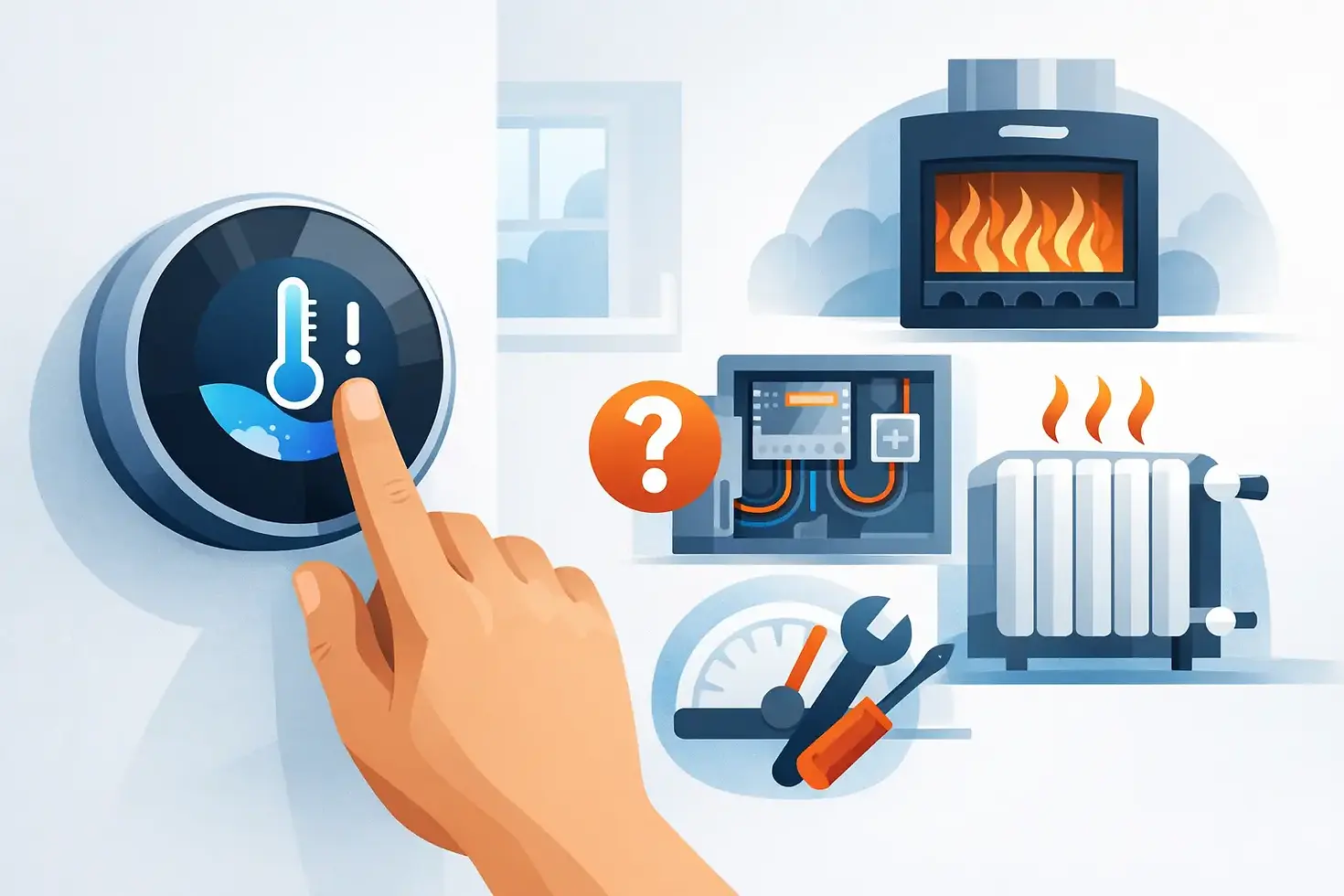
A cold house is frustrating enough. When the thermostat is showing a temperature but the radiators stay cold, it can be difficult to know whether the problem is a simple setting or a fault that needs repair. If your thermostat not turning heating on has left you without warmth, start with a few safe checks before assuming the boiler has failed.
The key is to avoid repeatedly resetting controls or removing boiler covers. A heating system has several parts that need to communicate properly: the thermostat, programmer, boiler, pump and radiator valves. One small issue can stop the whole system from responding.
Quick checks when your thermostat is not turning heating on
First, turn the thermostat up well above the current room temperature. If the display says the room is 18°C, set the target to 23°C for a few minutes. Many thermostats show a flame, radiator or heating symbol when they are calling for heat. If that symbol appears, the thermostat is probably sending a request, even if the boiler has not responded yet.
Check the heating programmer or timer as well. It may be set to off, timed operation, holiday mode or hot water only. For testing purposes, select constant heating or manual on, if your controls have that option. It is surprisingly common for a timer setting to be the cause, particularly after a power cut or a change to the clocks.
Check the thermostat power and location
Wireless thermostats often run on batteries. A fading display, blank screen or inconsistent response can mean the batteries need replacing. Use the battery type specified for the unit, fit them correctly and allow the thermostat a minute or two to reconnect with its receiver.
A wired thermostat can also lose power because of a tripped fused spur, flat battery backup or wiring fault. Do not take the thermostat off the wall or touch electrical connections. Check only what is safely accessible, such as the display and the nearby heating switch.
Where the thermostat is positioned matters too. If it is beside a radiator, in direct sunlight, above a fireplace or in a particularly warm part of the house, it may think the property is warmer than it really is. That can make it switch the heating off too soon. This is not usually an urgent fault, but it may need moving or replacing to give reliable control.
Look at the boiler display
If the boiler has power, check its front display for a warning light, error code or low-pressure reading. A normal sealed heating system often operates at around 1 to 1.5 bar when cold, although the correct range can vary by boiler. If the pressure is clearly low, the boiler may refuse to run safely.
Take a photo of any code or message shown. It gives a heating engineer a useful starting point and avoids guesswork. If you can smell gas, see scorching, notice water around the boiler, or a carbon monoxide alarm is sounding, do not continue checking the system. Leave the property if necessary, turn off the gas only if it is safe to do so, and seek urgent professional help.
Why the heating may not respond to the thermostat
A thermostat is not always the faulty part. It may be working perfectly but unable to bring the heating on because another component has failed.
With a wireless system, the thermostat and receiver may have lost their connection. The receiver is usually located near the boiler and may show a flashing light or no response when the thermostat calls for heat. Pairing controls is model-specific, so it is best not to press reset buttons at random. An incorrect reset can remove settings or make diagnosis more difficult.
The boiler may also be locked out because of low pressure, an ignition issue, frozen condensate pipework in very cold weather, a pump problem or an internal component fault. In these cases, the thermostat is only the messenger. Turning it up and down will not solve the underlying problem.
A motorised valve can be another cause in systems with separate heating and hot-water controls. If you still have hot water but no heating, or heating comes on only when hot water is selected, the valve may not be moving correctly. Likewise, a faulty programmer, receiver or wiring connection can interrupt the signal between the thermostat and boiler.
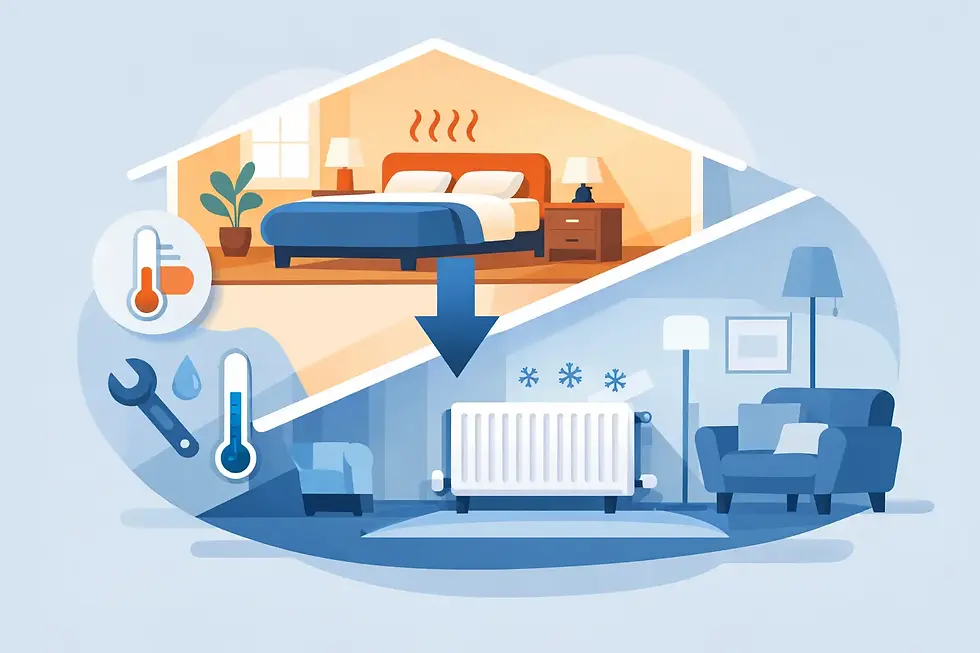
Radiator valves should not be overlooked. If only one or two rooms are cold, the main heating system may be working but individual thermostatic radiator valves could be stuck or turned down. If every radiator remains cold and the boiler does not fire when heating is requested, the fault is more likely to be with the controls or boiler.
Safe steps you can take before booking a repair
You can check the thermostat setting, replace accessible batteries, confirm the programmer is set to heating on, and look at the boiler display. If your boiler manual specifically permits one reset, a single reset may be reasonable after noting any error code. Do not keep resetting it. A boiler that repeatedly locks out is telling you there is a fault to investigate.
Do not remove the boiler casing, interfere with wiring, open sealed components or attempt to repair a gas appliance yourself. Avoid topping up the system pressure unless you already know exactly how your particular boiler works and have previously been shown the correct method. Overfilling can create another problem, and pressure that keeps dropping may indicate a leak that needs attention.
If there is water leaking from pipework or the boiler, place towels or a container underneath only where this can be done safely. Do not use electrical equipment near the leak. If water is reaching electrical fittings, isolate power only if you can do so without risk and arrange urgent help.
When to call for heating help
Call for a repair if the thermostat is set correctly but the boiler does not respond, the receiver will not communicate, the boiler shows a fault code, or your heating has stopped altogether. A prompt diagnosis is particularly important for homes with children, older residents or anyone vulnerable to cold.
For landlords and letting agents, a heating failure needs a clear and timely response. Record the fault message, whether hot water is still available and whether the boiler has leaked or lost pressure. Those details help get the right repair underway sooner while keeping tenants informed.
Active 24-7 provides practical domestic heating fault diagnosis in Harpenden, Wheathampstead, Redbourn and Batford. The aim is straightforward: identify whether the issue is the thermostat, controls, boiler or heating system, explain what has gone wrong without jargon, and carry out the right repair where possible.
A thermostat problem is often fixable, but no heating can become more than an inconvenience quickly. Make the safe checks, keep a note of what the controls and boiler are doing, and get professional help when the system is not responding as it should.

Comments