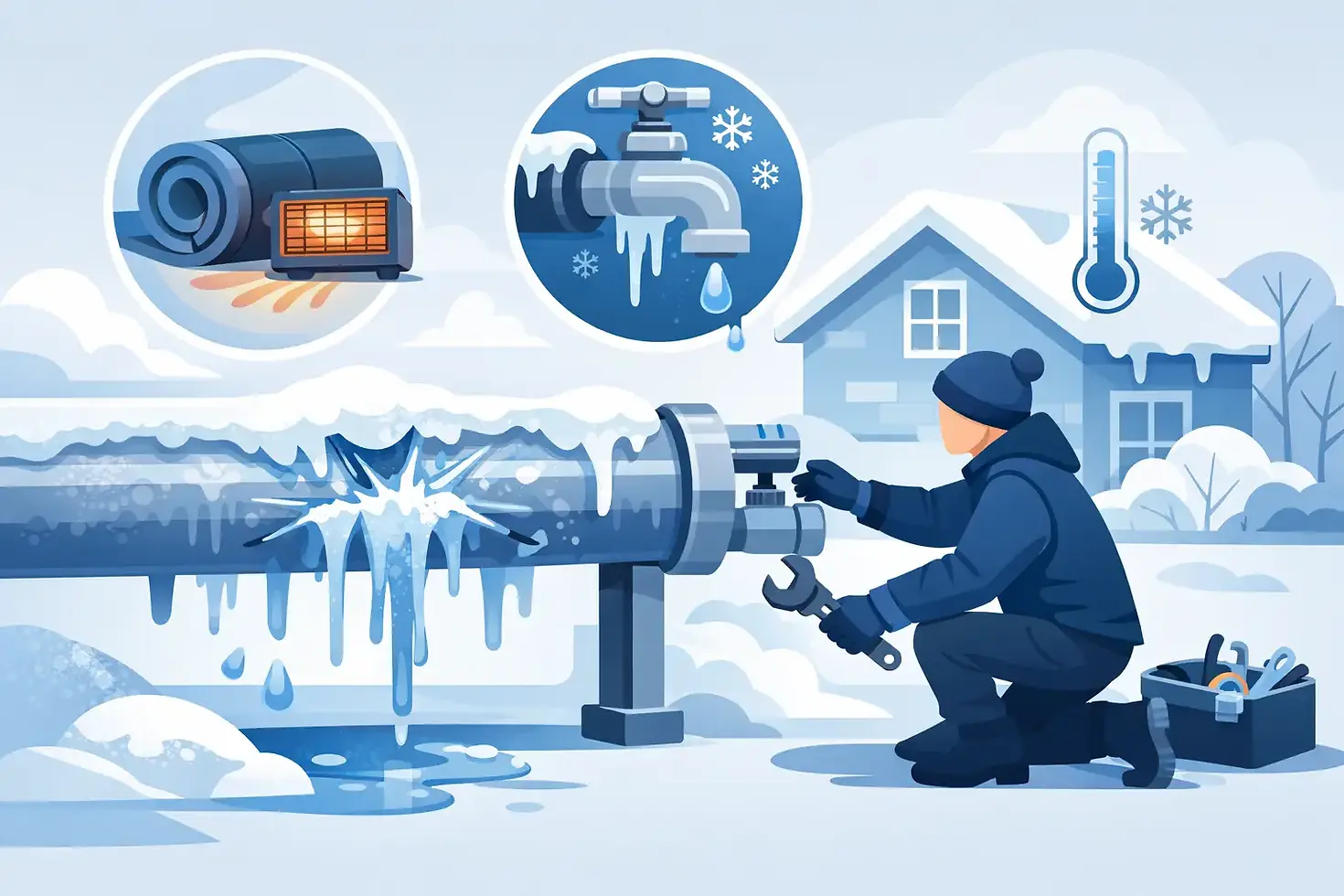
Frozen Pipes: What to Do Before They Burst
- Iyanu Emmanuel
- 4 days ago
- 5 min read

A frozen pipe can go from a cold tap to a serious leak with very little warning. If you are searching for frozen pipes what to do, the priority is simple: protect your home from water damage first, then arrange a safe repair or thaw. Do not wait for the pipe to burst before taking action.
What to do when pipes are frozen
Start by checking whether water is still flowing from your cold taps. A weak trickle, no water at all, frost on an exposed pipe or an unusually cold patch on a wall can all point to a frozen section. Pipes in lofts, garages, cupboards against outside walls and under kitchen sinks are common trouble spots.
Take these steps calmly and in order:
1. Turn off the water supply at the internal stopcock. This will not thaw the pipe, but it limits the amount of water released if it has already cracked or splits as it warms up.
2. Open the affected cold tap. Leave it open while the pipe thaws. This gives melting water somewhere to go and helps relieve pressure in the pipe.
3. Turn off heating controls only if there is an immediate leak or electrical risk. Otherwise, keep your central heating running at a steady temperature to warm the property gradually.
4. Check for signs of a burst pipe. Look for dripping, damp patches, bulging ceilings, water beneath cupboards or a water meter that continues moving after the supply is isolated.
5. Call a plumber if there is a leak, no clear access to the pipe, or any doubt about its condition. A frozen pipe can be damaged internally even if it starts running again.
If water is escaping near sockets, light fittings, your boiler or any electrical equipment, keep clear of the area and switch off the electricity at the consumer unit only if it is safe to do so. Do not stand in water to reach it.
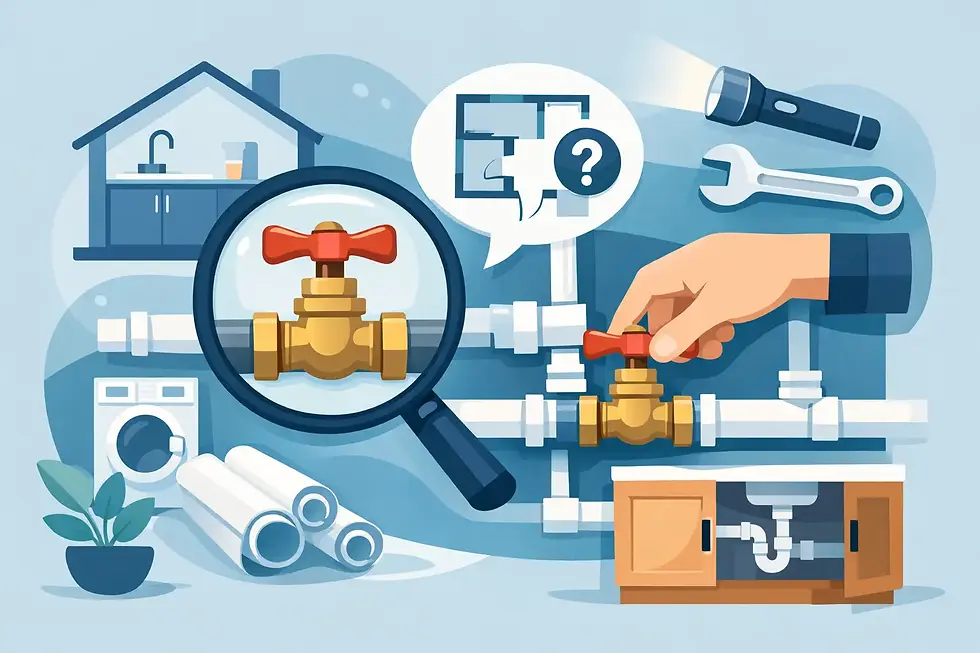
Find the stopcock before you need it
In many homes, the internal stopcock is under the kitchen sink, in a utility room, near the front door, under the stairs or beside the water meter. Turn it clockwise to close it. If it is stiff, do not force it hard enough to damage it. A plumber can free or replace a seized stopcock, but an emergency is not the moment to find out it does not work.
How to thaw a frozen pipe safely
Only attempt to thaw a pipe if you can see and reach it easily, there is no visible split, and the area is dry and safe. The aim is gentle, even warmth - not a blast of heat.
A warm damp cloth wrapped around the pipe can help, as can a hairdryer on a low setting held at a safe distance and moved constantly along the pipe. Begin close to the tap end and work back towards the frozen section. This approach allows water to escape as the ice melts.
You can also warm the room by opening cupboard doors beneath sinks and increasing the heating gradually. Keep the room ventilated if condensation builds up, particularly in a small kitchen or utility area.
Never use a blowtorch, naked flame, heat gun or boiling water. Extreme heat can damage pipework, melt plastic fittings, scorch surrounding materials or cause the pipe to split. It is also risky around insulation, stored items and timber in loft spaces. A quick fix is not worth turning a plumbing problem into a fire risk.
If the pipe is behind a wall, below a floor, in the loft or somewhere you cannot inspect properly, leave it alone and call for help. Forcing heat into an unknown area can conceal the real problem rather than solve it.
What if the pipe has burst?
A burst pipe needs fast action, even if the leak seems small. Turn off the internal stopcock straight away, then open cold taps to drain water from the system. If the leak is from a hot-water pipe, switch off the boiler or hot-water heating function once it is safe to do so. Do not keep using taps, showers, washing machines or dishwashers.
Move furniture, rugs and valuables away from the area if you can do so safely. Use towels, buckets and waterproof containers to catch water, but do not attempt a permanent repair with tape or sealant. These can fail without warning when water pressure returns.
If a ceiling is bulging with trapped water, keep people away from the room below. The ceiling may be weakened, and water can spread into electrics. This is a situation for urgent professional help.
For homeowners, landlords and letting agents, it is worth taking clear photographs of the damage once the immediate risk is controlled. They can be useful for insurance records and for showing where water has travelled. The repair itself should include checking nearby joints and fittings, not just replacing the obvious split section.
Frozen heating pipes and boilers
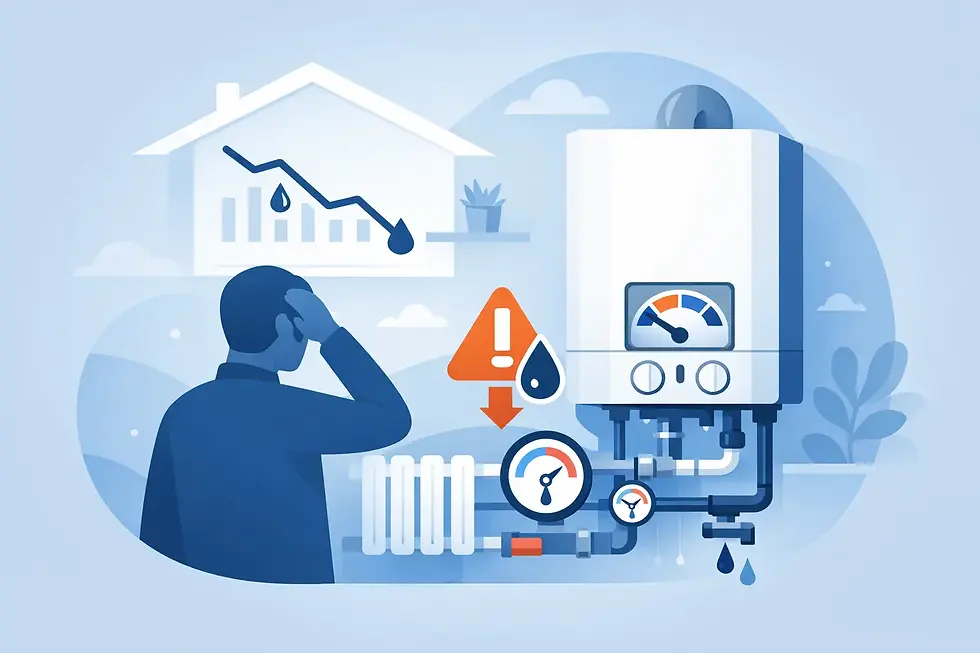
Not every loss of heating or hot water in freezing weather means a household water pipe has frozen. A boiler condensate pipe can freeze outside, causing the boiler to shut down. This pipe is usually plastic and carries condensation away from the boiler. You may see a fault code on the display or hear the boiler trying to start and then stopping.
Do not remove the boiler casing or interfere with its internal parts. Where the external condensate pipe is clearly accessible, gentle warming may be possible, but it depends on the installation and the location of the blockage. If you are unsure, a heating engineer can diagnose whether the issue is a frozen condensate pipe, low system pressure, a boiler fault or another heating problem.
If your home has solar thermal hot-water equipment alongside conventional plumbing and heating, do not guess at valves or controls. These systems have additional components, and the safest route is an accurate diagnosis before anything is adjusted.
When to call a plumber for frozen pipes
Call promptly if there is any leak, dampness, burst pipe, water near electrics, loss of water throughout the house, or a frozen pipe you cannot reach safely. It is also sensible to get help if a pipe has thawed but you are worried it may have been damaged. Small cracks may only show up once normal pressure is restored.
Active 24-7 provides emergency domestic plumbing and heating support across Harpenden, Wheathampstead, Redbourn and Batford. The focus is on finding the cause, making the area safe and carrying out a practical repair without jargon or pressure.
A plumber can isolate the affected section, repair damaged pipework, check the stopcock, assess insulation gaps and advise whether any other vulnerable pipes need attention. That is particularly useful after a cold snap, when more than one part of the system may have been exposed.
Prevent frozen pipes next time
The best protection begins before temperatures drop. Keep your heating on a low, steady setting when cold weather is forecast, including when you are away from home. Sudden temperature swings can be harder on pipework than a consistently heated property.
Insulate exposed pipes in lofts, garages, cupboards and outbuildings with suitable pipe lagging. Check that loft hatches close properly, and repair draughts around external walls where practical. Open cupboard doors under sinks during severe cold weather so warm air can circulate, but keep cleaning products and other hazards out of children’s reach.
If the property will be empty for more than a few days in winter, do not simply switch everything off and hope for the best. Consider the heating setting, insulation, the location of the stopcock and whether someone can check the property. Landlords should make sure tenants know how to report a leak quickly and where the stopcock is located.
A frozen pipe is stressful, but the first few minutes make a real difference. Shut off the water if there is any risk of a split, avoid dangerous heating methods, and get the problem checked properly before normal pressure is restored.
Comments