Low Water Pressure: Causes and What to Do
- Iyanu Emmanuel
- Jul 20
- 5 min read

A shower that drops to a trickle halfway through, a kitchen tap that takes ages to fill the kettle, or hot water that has suddenly lost its flow can make an ordinary day feel far more difficult. Low water pressure is not always an emergency, but it can point to a fault that needs dealing with before it becomes a leak, loss of hot water or bigger disruption.
The useful first question is simple: is the problem affecting every tap and appliance, or only one? That distinction often tells you whether the issue is inside your home, connected to the incoming supply, or limited to a particular fitting.
Low water pressure: start with these checks
Before assuming the worst, check whether the low flow affects both hot and cold water. Try the kitchen tap, bathroom basin and shower at different times of day. If only one tap is weak, the cause is often local to that tap. If every outlet is affected, the problem may be with the main supply, an internal valve or a pipework fault.
It is also worth asking a nearby neighbour whether they have noticed the same issue. A supply problem in the street can affect more than one property, particularly after work on the water main or during a period of unusually high demand. Your water supplier is responsible for the public supply up to the usual boundary point, while pipework and fittings within your property are normally your responsibility.
Do not confuse water pressure with flow rate. Pressure is the force available in the pipework; flow is the amount of water that reaches the outlet. A blocked shower head can give poor flow even where the incoming pressure is perfectly adequate. A plumber will assess both when diagnosing the fault.
When one tap or shower has poor flow
A single weak outlet is often the least serious version of the problem. Limescale and debris can clog an aerator on a tap or the nozzles in a shower head, especially in hard-water areas. Removing and cleaning the affected part may restore the flow, provided it can be done without forcing or damaging the fitting.
Modern taps and showers can also contain filters, flow restrictors and cartridges. These parts improve control and efficiency, but they can become blocked after work on the water supply has disturbed sediment. If cleaning the visible aerator or shower head does not help, avoid dismantling concealed parts unless you know the fitting well. Small seals and cartridges are easy to damage, and a straightforward low-flow issue can turn into a leak.
If the cold side of a mixer tap is strong but the hot side is weak, the issue is more likely to be on the hot-water side. That could mean a blocked valve, restricted pipework, a fault in the hot-water system or, in some homes, a problem with a pump.
Why pressure can fall across the whole house
When low water pressure affects several taps, there are a few common causes. Some are quick to resolve. Others need proper diagnosis rather than guesswork.
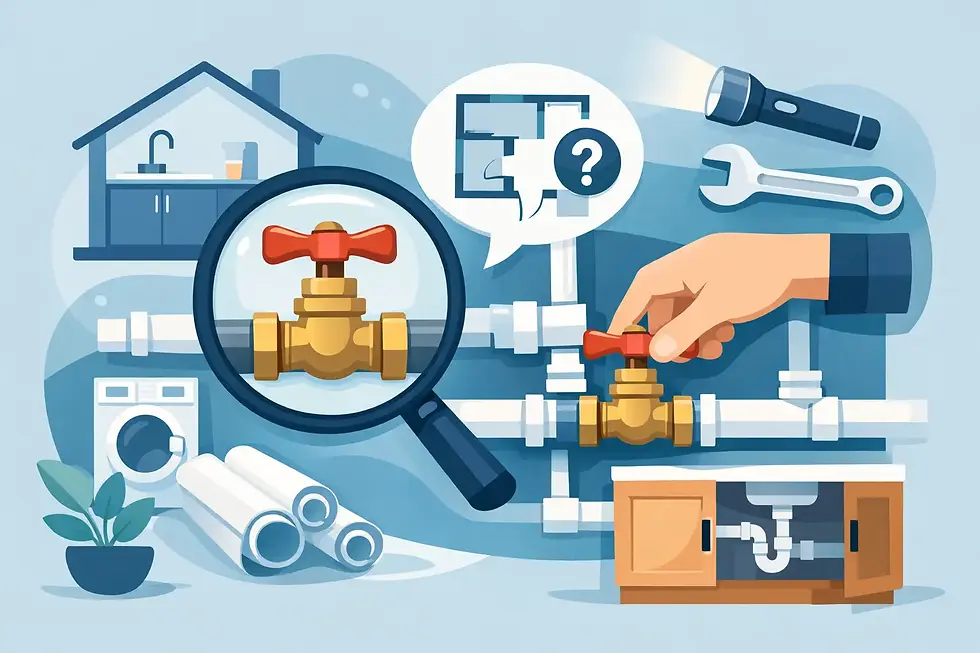
The internal stopcock is a good place to start. It is commonly found under the kitchen sink, in a utility room or near where the water supply enters the property. If it has been partly closed after previous work, it can restrict the supply to the whole house. It should be open fully, but older stopcocks can seize or start leaking when moved. If it does not turn easily, leave it alone and arrange for it to be checked.
A pressure-reducing valve may also be fitted, especially where the incoming supply is naturally strong. These valves protect fittings and appliances, but they can fail or become obstructed. Adjusting one without testing the system can create too much pressure elsewhere, so this is work for a plumber.
Partially blocked or ageing pipework can restrict flow gradually. Older properties may have narrow sections of pipe, internal corrosion or previous alterations that do not provide enough capacity for modern showers and multiple outlets. The pressure may seem acceptable at a tap until somebody runs a shower, flushes a toilet or starts a washing machine. That pattern points to a supply or pipework capacity issue rather than a sudden failure.
A hidden leak can also reduce pressure. Look for damp patches, staining, unexplained mould, warped flooring, water marks beneath sinks, or a water meter that continues to move when every tap and appliance is off. If you suspect a leak, act promptly. Water can travel a long way before becoming visible, and delaying repairs can increase damage to walls, floors and ceilings.
Low pressure on hot water only
Poor hot-water flow needs a little more care because the cause depends on the type of system in your home. A combi boiler, unvented cylinder, vented cylinder and pumped shower system all behave differently.
With a combi boiler, weak hot-water flow may be caused by a restricted inlet filter, a blocked component, scale build-up or a fault within the boiler-related pipework. If cold water is flowing normally but hot water is weak at several outlets, it is sensible to arrange a diagnosis rather than repeatedly resetting the boiler.
For homes with stored hot water, a fault may be linked to a valve, pump, cylinder connection or pipework restriction. Solar thermal equipment can add another layer where it works alongside the domestic hot-water system. The solar side is not automatically the cause, but the full arrangement should be considered before any repair is recommended.
A boiler pressure gauge is a separate issue. On a sealed heating system, the gauge shows pressure in the central-heating circuit, not the pressure at your taps. A low boiler reading may lead to heating problems, but topping up the boiler will not fix weak mains water flow. If you are unsure which problem you have, do not make repeated adjustments. A clear diagnosis saves time and avoids creating another fault.
What not to do when water flow drops
It is tempting to turn every valve, remove boiler panels or fit a larger pump as soon as the shower becomes disappointing. Those actions can hide the real problem or cause damage.
Do not keep turning an old stopcock if it is stiff. Do not alter the boiler filling loop to improve tap pressure. Do not install a pump directly onto the mains supply unless it has been designed and installed correctly for the system. And do not ignore a sudden loss of pressure alongside signs of a leak.
If there is active water escaping, turn off the internal stopcock if it can be operated safely, switch off electrical power near any water affected area where safe to do so, and seek urgent help. A major change in water pressure after freezing weather, building work or a burst pipe also warrants a prompt inspection.
When to call a plumber
A plumber can trace whether the restriction is at the incoming supply, a valve, a pipe run, the hot-water system or a particular outlet. The aim is not to sell a replacement before it is needed. It is to identify the cause, explain the practical options and carry out the repair properly.
Call for help if low water pressure has appeared suddenly throughout the home, if you can see or hear a leak, if hot water has become weak or unavailable, or if the issue is affecting tenants in a rented property. Landlords and letting agents should not leave tenants without reliable water or hot water while waiting to see whether the problem improves.
For homeowners in Harpenden, Wheathampstead, Redbourn and Batford, Active 24-7 can investigate domestic plumbing and heating faults without jargon or pressure. Whether the solution is a cleaned fitting, repaired valve, leak repair or a closer look at the hot-water system, the right fix depends on what is actually causing the restriction.
A weak tap may be a small inconvenience. A whole-house drop in pressure is your home telling you to look a little closer. Check what is affected, watch for signs of a leak, and get practical help before a manageable repair becomes a disruptive one.


Comments